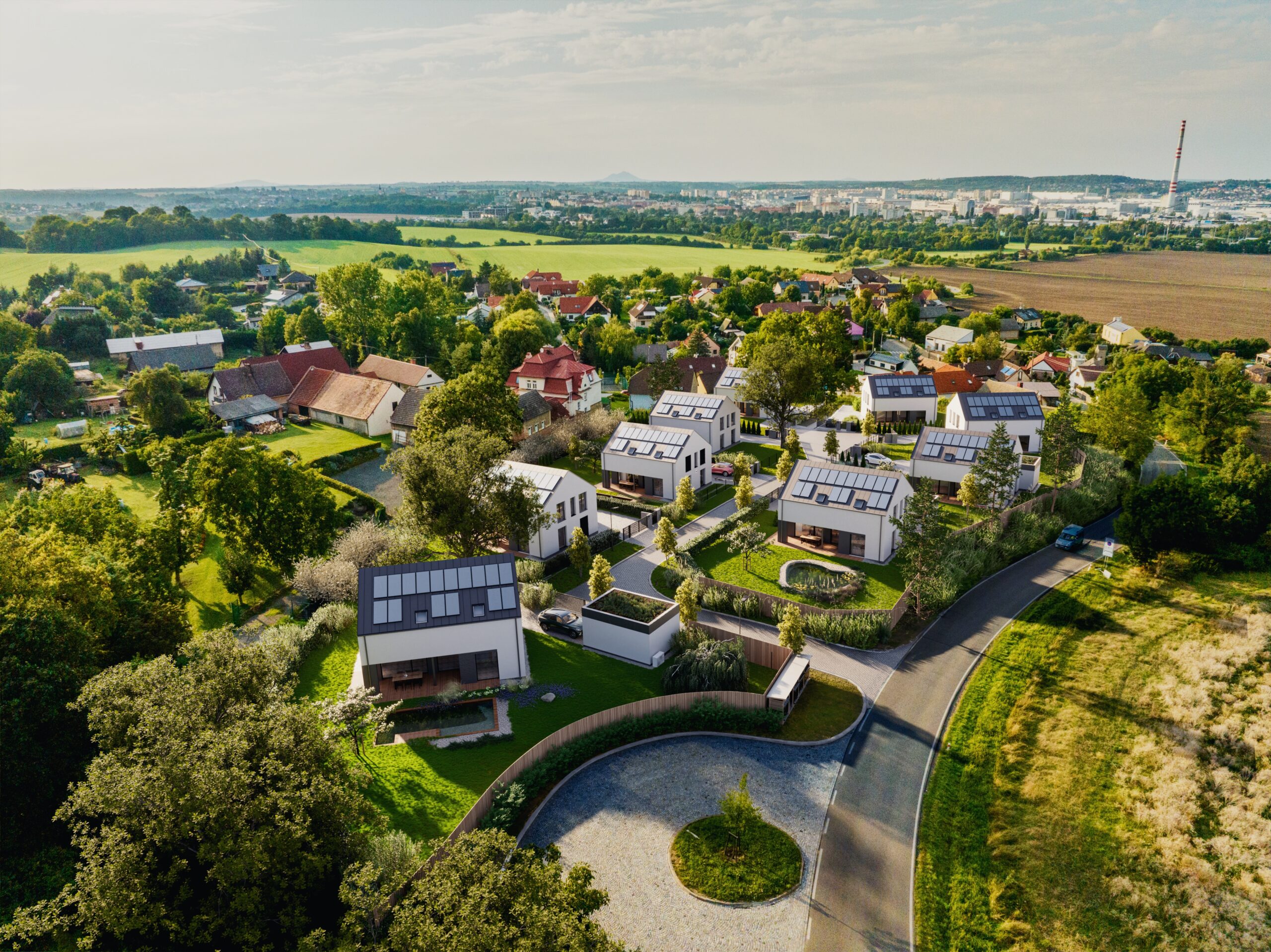
Rising energy costs have become a defining issue for Czech households. While much of the public debate focuses on reducing day-to-day consumption, less attention is paid to the underlying factor that has the greatest long-term impact – the way homes themselves are designed and built. This is precisely the area addressed by ZEO Homes, a sister company of the investment and development group Pierwood Capital, which is entering the Czech market with a housing concept focused on long-term operational efficiency.
ZEO Homes develops passive-standard timber houses using Cross-Laminated Timber (CLT) or SIP panels, combining high living standards, a healthy indoor environment, and lower energy demand compared to conventional housing. At a time when energy prices remain volatile, operating costs are becoming an increasingly important factor in residential decision-making. For many households, energy and related costs represent a substantial and often growing financial burden over time.
Homes designed in a passive standard, particularly when combined with technologies such as high-performance insulation, heat recovery ventilation, and on-site energy generation, have the potential to reduce this burden and contribute to greater long-term cost stability, with reduced exposure to fluctuations in energy prices. These outcomes are based on commonly accepted industry benchmarks, including passive house standards, and reflect typical residential scenarios. However, actual performance depends on a range of factors, including building design, technical configuration, and user behaviour. The figures should therefore be understood as indicative of achievable performance rather than guaranteed outcomes.
Over the long term, differences in operating efficiency can accumulate into meaningful financial savings, making energy performance an increasingly relevant factor not only for sustainability but also for the overall cost of living.
“People tend to focus on monthly energy bills, but often overlook that the real issue lies in how the home itself is designed. When this is addressed correctly, energy costs become far less significant over time,” says Frank Nourse, founder of ZEO Homes.
ZEO Homes builds using Cross-Laminated Timber (CLT) or SIP panels, a modern construction material that enables precise prefabrication, efficient construction, and contributes to a high-quality indoor environment. Standard features include mechanical ventilation with heat recovery, underfloor heating, triple-glazed windows with external shading, and intelligent home management systems. A key element of the concept is the integration of energy systems directly into the home. Each house is equipped with photovoltaic panels and battery storage, designed to maximise the use of self-generated energy and reduce reliance on external suppliers.
“After years in traditional real estate development, we realised that people are not only paying for the property itself, but increasingly for how it performs over time. That’s where more thoughtful design can make a meaningful difference,” adds Nourse.
ZEO Homes plans to expand its approach across future developments throughout the Czech Republic, responding to one of the most significant shifts in residential living in recent years – the growing importance of energy performance as a core factor in housing quality and long-term affordability.