Strong tenant activity in the fourth quarter and the second-best annual result in the market’s history confirm that the industrial and logistics sector remains one of the most resilient segments of commercial real estate in Poland. Despite limited new supply, the market maintains a stable equilibrium – according to the “Review. Industrial and Logistics Real Estate Market” report for Q4 2025 by BNP Paribas Real Estate Poland.
Analysis of the report’s data indicates a revival in the industrial and logistics real estate market toward the end of 2025. Rising demand and solid market fundamentals show that this segment continues to be among the most resistant to fluctuations.
“Despite ongoing geopolitical and macroeconomic challenges, the sector has demonstrated remarkable resilience and stability, with growth rates remaining robust. As a result, Poland continues to strengthen its position as one of the region’s key markets – for both investors and tenants,” says Ludwika Korzeniowska, Head of Industrial and Logistics Department, BNP Paribas Real Estate Poland.
New supply adapting to market conditions
Last year saw a clear adjustment in developer activity to changing market conditions. In recent quarters, new supply has gradually slowed, with 137,000 sqm delivered in the fourth quarter. This trend fits the ongoing market stabilisation process.
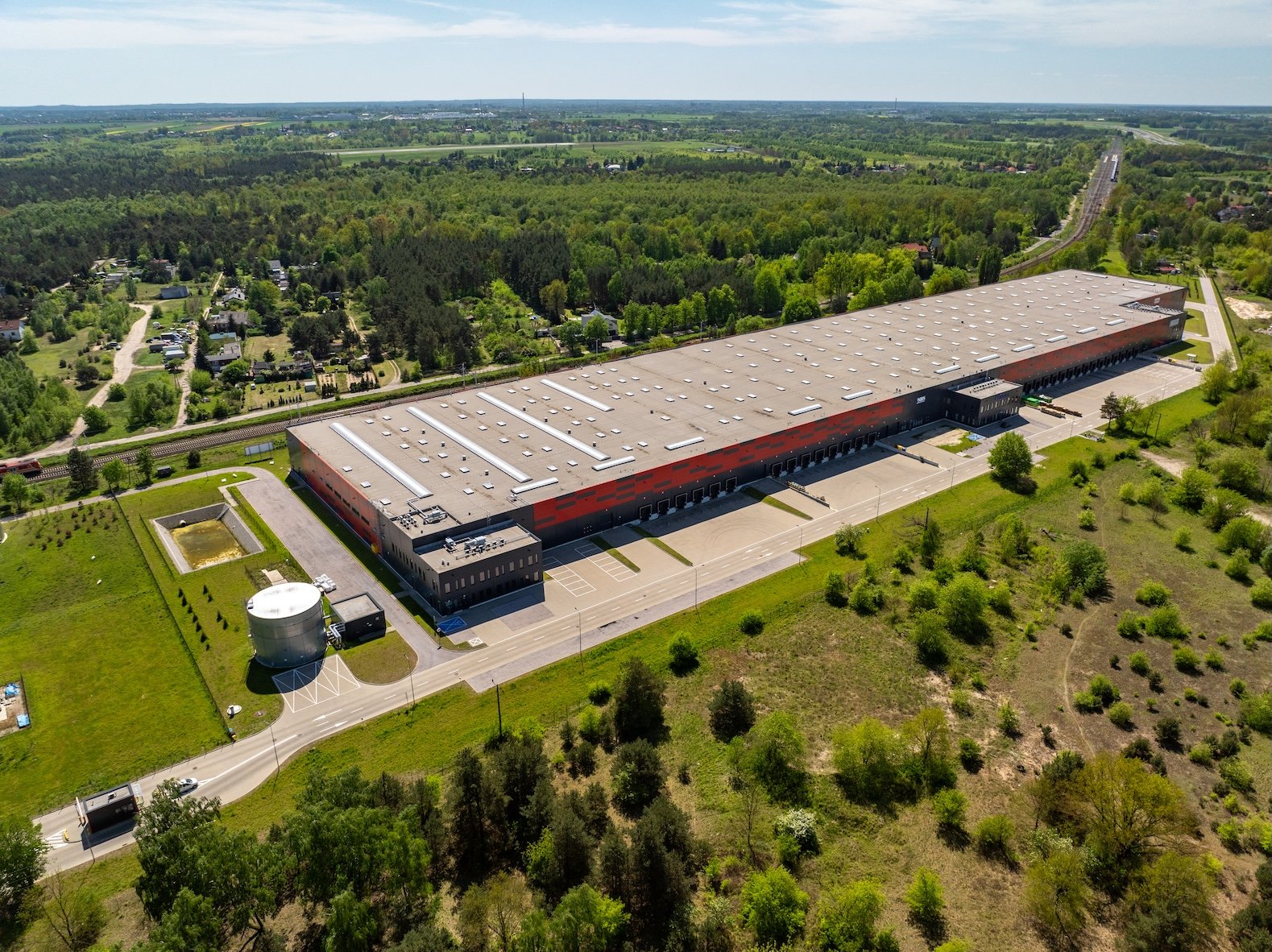
The largest industrial and logistics projects completed at year-end were mainly concentrated in the Warsaw II zone, where the two biggest investments were delivered: Panattoni Park Warsaw North III (32,000 sqm) and Warsaw Logistic Park (28,000 sqm). Other notable completions included CT Park Toruń (22,000 sqm), Hillwood Częstochowa–Miasto (18,000 sqm), and Park Lublin II (11,000 sqm).
Throughout 2025, a total of approximately 1.7 million sqm of new space was delivered, marking a 35% decrease compared to the previous year.
More new space in the pipeline
Developers have not withdrawn entirely from launching new projects. At the end of December, 1.8 million sqm of industrial and logistics space was under construction, with nearly 40% being speculative projects. In the fourth quarter alone, construction started on 444,000 sqm, signalling steady market development and sustained developer investment activity.
In terms of project scale, Warsaw accounts for 36% of industrial and logistics space currently under construction. Regional markets continue to dominate. Among the largest ongoing projects are Panattoni Park Grodzisk VI in Warsaw II (86,000 sqm, developed by Panattoni) and 7R Park Gdańsk III in Tricity, which will bring 80,000 sqm of modern warehouse space.
Tenants seeking space
In Q4 2025, gross transaction volume on the industrial and logistics market reached 2.2 million sqm, up about 8% year-on-year and significantly impacting the annual result. Three regions led the transaction structure: Central Poland (25%), Lower Silesia (18%), and Warsaw II (16%).
Tenant activity was high throughout the year. In 2025, deals totalling 6.64 million sqm of modern warehouse space were finalised, marking a 14% increase versus 2024. The result from January to December is the second-highest in the Polish market’s history, second only to the 2021 record.
The top leasing deal in Q4 2025 was secured by a confidential tenant, who leased 120,000 sqm at SEGRO Logistics Park Stryków in Central Poland (renegotiation with expansion). Another significant deal was signed by Terg at Panattoni Park Łódź (75,000 sqm, renegotiation).
The transaction structure shows a considerable share of renegotiations. In Q4 2025, lease extensions accounted for 53% of contracts, while new leases made up 41%. This market picture points to tenant caution but also a mature market, where much activity comes from existing participants optimising their portfolios.
From early October to late September, brands in the 3PL sector led gross demand, accounting for 36% of all leasing transactions. Electronics & Home Appliances companies ranked second (16%), followed by FMCG firms (15%).
Market absorbs vacancies
In terms of availability, Q4 2025 saw 2.7 million sqm of industrial and logistics space offered for lease, up nearly 5% year-on-year. At year-end, the vacancy rate stood at 7.4%, just 0.1 percentage points lower than the previous year. This confirms the continued balance between supply and demand, as well as the market’s ability to absorb available space.
BNP Paribas Real Estate analysts also highlighted the commercialisation level of projects under construction. From October to December, newly built properties were 61% leased, an increase of 8.6 percentage points compared to the same period last year.
The limited scale of new development helped keep rental rates stable, though increases may appear over the longer term.
“The pressure for rental rate growth remains evident, especially in prime locations and newly delivered properties, which is reflected in the gradual rise of upper asking rent levels,” notes Karolina Galas, Associate Director, Industrial and Logistics Real Estate, BNP Paribas Real Estate Poland.