Prague ranks among the European cities with the highest projected growth in flexible office space. This is primarily due to the long-standing shortage of new office buildings available for lease on the open market and to growing corporate demand for comprehensive services. Flexible offices are thus gradually shifting from being a market add-on (or nice to have) to becoming its driving force.
According to data from Colliers, the volume of flexible office space in the EMEA region more than quadrupled between 2010 and 2024. The number of office centres rose from approximately 1,450 to more than 4,358. Looking ahead, the market is expected to grow fastest in London, Prague, Amsterdam and Berlin.
Office as a Service, Not Just Space
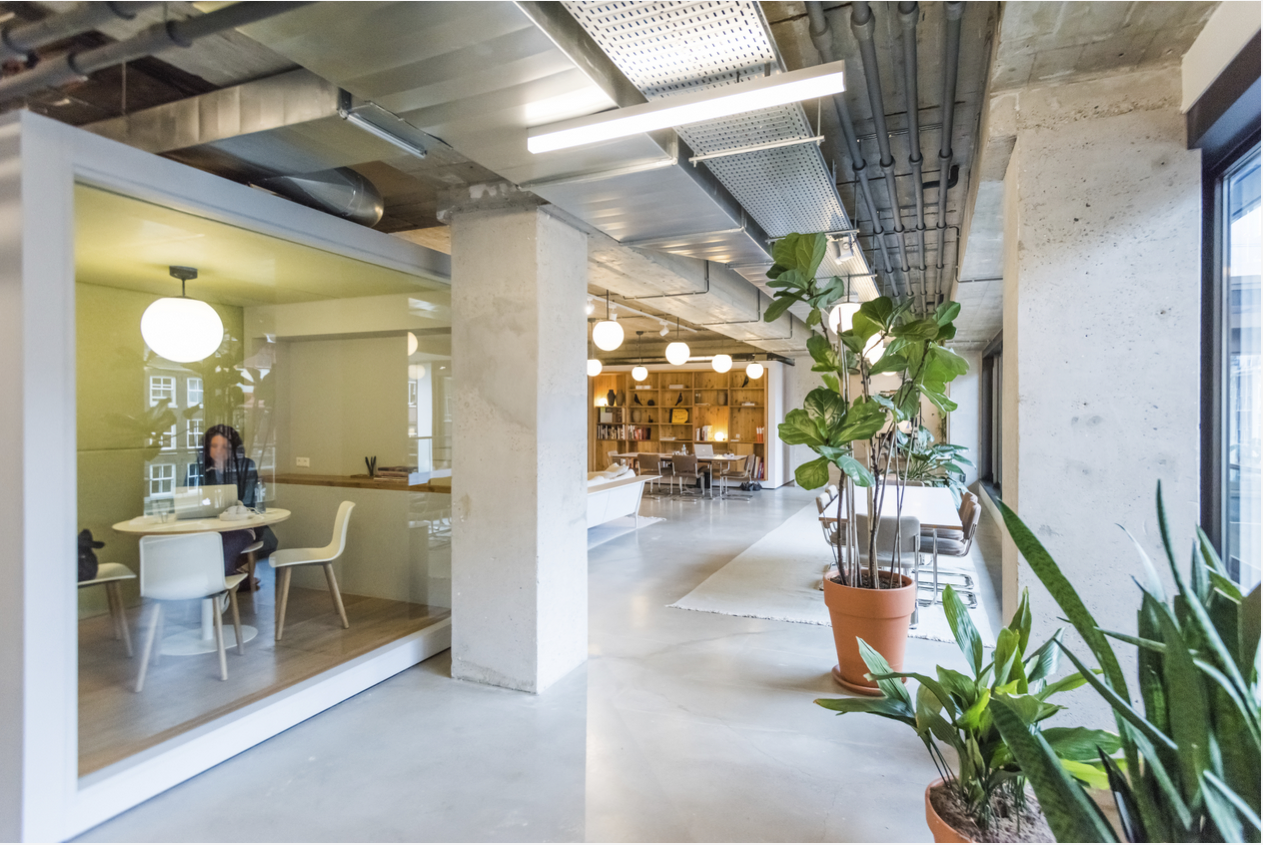
Although flexible offices currently make up only a fraction of the office market, they are already fundamentally influencing its operations and changing the way companies think about the work environment. The key issue is no longer just where employees work, but above all, how efficiently space is utilised and what level of comfort it offers users.
“Flexible projects are bringing a service-oriented philosophy to the office segment. Traditional landlords are gradually adopting this approach as well, expanding their service offerings and adapting spaces to users’ real needs. Flex spaces are thus gradually evolving from an alternative to traditional offices into a standard that sets the direction for the entire office market,” says Jana Vlková, Director of the Workplace Advisory and Office Agency division at Colliers, noting that an office is no longer just a space, but a service. And as with other services, the focus here is increasingly on the actual value per user, rather than per square meter. In practice, this means that even companies in traditional offices are beginning to use metrics such as cost per desk or cost per utilised seat. These often paint a significantly different picture than the traditional price-per-square-meter metric—especially in environments where some workstations remain unused during the week due to hybrid work arrangements.
City centers back in vogue, and flexibility is part of building owners’ strategies
As flexible offices evolve, location preferences are shifting as well. Operators are increasingly targeting city centres, which offer better accessibility, a wider range of services and an attractive work environment. While 34% of new flexible projects were launched in city centres in 2023, this figure rose to 47% by 2025. Flexible offices thus reinforce the return of work life to city centres and support those areas’ further development.
Flexible offices also no longer stand as the exclusive domain of specialised operators. They are increasingly becoming part of strategies for building owners themselves. These owners integrate flexible offices directly into their projects and complement them with a broader range of services inspired by the hospitality industry—from fitness centres and cafés to event spaces.
“Since 2020, business owners have directly initiated the launch of more than 311 flexible office projects in the EMEA region. This trend confirms that flexibility is becoming a standard feature of modern office buildings,” comments Jana Vlková.
Flex vs. traditional lease: the difference is no longer in price, but in cost structure
A model comparison by Colliers shows that the difference between the costs of flexible offices and traditional leases is gradually disappearing.
A model example of a company that uses 250 workstations and corresponding facilities for 400 employees working in a hybrid model shows that it would pay approximately 1.09 million euros per year for traditional offices in Prague, while for flexible offices, the cost would be roughly 1.35 million euros.
However, the initial investment must also be included in the overall calculation: for a traditional office, this can be around 3 million euros; whereas, for flexible offices, it amounts to only tens of thousands of euros for renovations and branding. When calculated over ten years, the total costs effectively even out.
“From a purely financial perspective, a major advantage of choosing a flexible office is that the company does not have to make a large initial investment. Furthermore, these spaces are typically leased under a service agreement, which offers additional accounting and tax benefits,” adds Jana Vlková. Although the growth of the flex market is currently very dynamic, Jana Vlková expects that with the gradual recovery of development and construction activity, the market will once again focus more significantly on traditional office leasing. However, these spaces will increasingly adopt the service standards and user comfort typical of flexible projects.