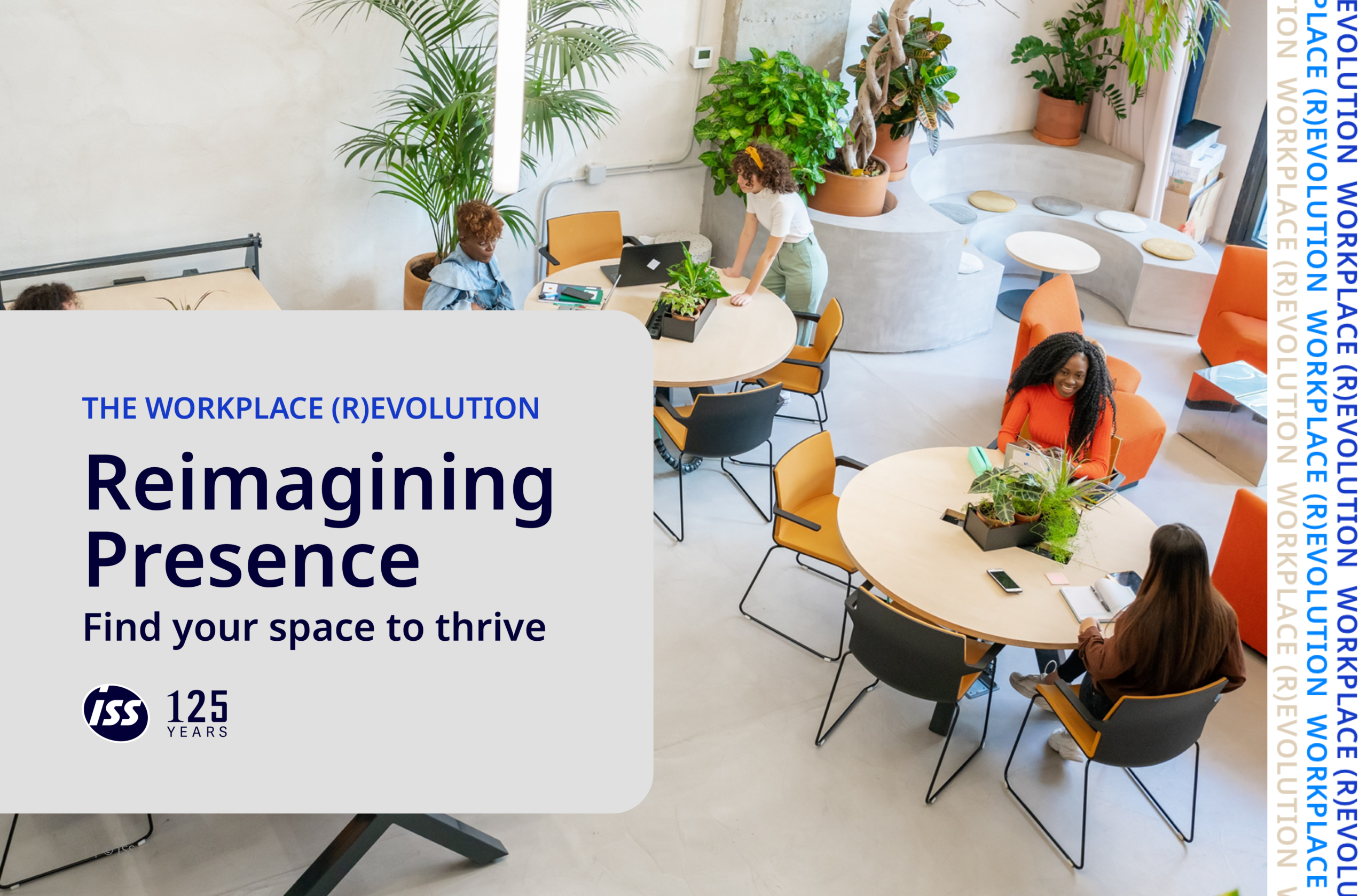
While many organisations want to increase employee presence in the office, reality often looks very different. According to the ISS report “The Workplace (R)evolution: Reimagining Presence”, as many as 81 percent of employees today work in a hybrid model, and some of them visit the office only occasionally. As a result, more and more organisations are facing a new challenge: how to encourage employees to return to the office – not out of obligation, but by choice.
The ISS report shows that traditional approaches to office management are becoming less effective. In many organisations, a quiet battle over attendance is taking place – employers introduce mandatory office days, while employees increasingly expect greater flexibility in how and where they work.
The issue is that being physically present does not automatically create value. Employees are increasingly asking themselves a simple question: Does coming to the office actually help me work better? If the answer is “no,” they are more likely to choose working from home.
“Mandating office attendance may increase presence, but it will not make people more engaged. Employees return to the office when they see real value in it – opportunities to collaborate, access to knowledge, good conditions for concentration, or the feeling of being part of a team,” says Alicja Muszalska, Architect and Business Development Manager at ISS.
The report also shows that employees use the office in different ways and for different purposes. Some come primarily to collaborate and meet with their teams. Others look for spaces that support focus and individual work. For many, the office also plays an important role in strengthening organisational culture and building relationships.
As a result, a new approach to the workplace is gaining momentum. Instead of asking how many days employees should spend in the office, organisations increasingly ask what needs to happen in the office for people to want to come in. This also means that designing workplaces around one “standard” way of working is no longer sufficient.
In this context, leaders responsible for workplace environments are no longer focused solely on managing office space or desk availability. Increasingly, they are responsible for the overall workplace experience – from the moment someone enters the building, through access to services and technologies, to the quality and comfort of the working environment throughout the day.
“The office is no longer just a space. It is becoming a system of experiences. Whether employees want to be in the office often depends on small details: an efficient reception, well-organised meetings, access to services, acoustic comfort, or the quality of collaboration spaces,” adds Muszalska.
As a result, more organisations are starting to treat the workplace as a connected and integrated system. It combines office design, building management, facility management services, and technologies that support teams in their everyday work.
In this model, the office is no longer viewed solely as an operational cost. Instead, it becomes a tool that supports productivity, collaboration and a strong organisational culture.
The ISS report shows that the future of offices does not lie in simply increasing the number of workstations or enforcing mandatory office days. The key is to create a workplace environment that genuinely supports employees in their daily tasks. When that happens, returning to the office stops being an imposed requirement – and becomes a natural choice.