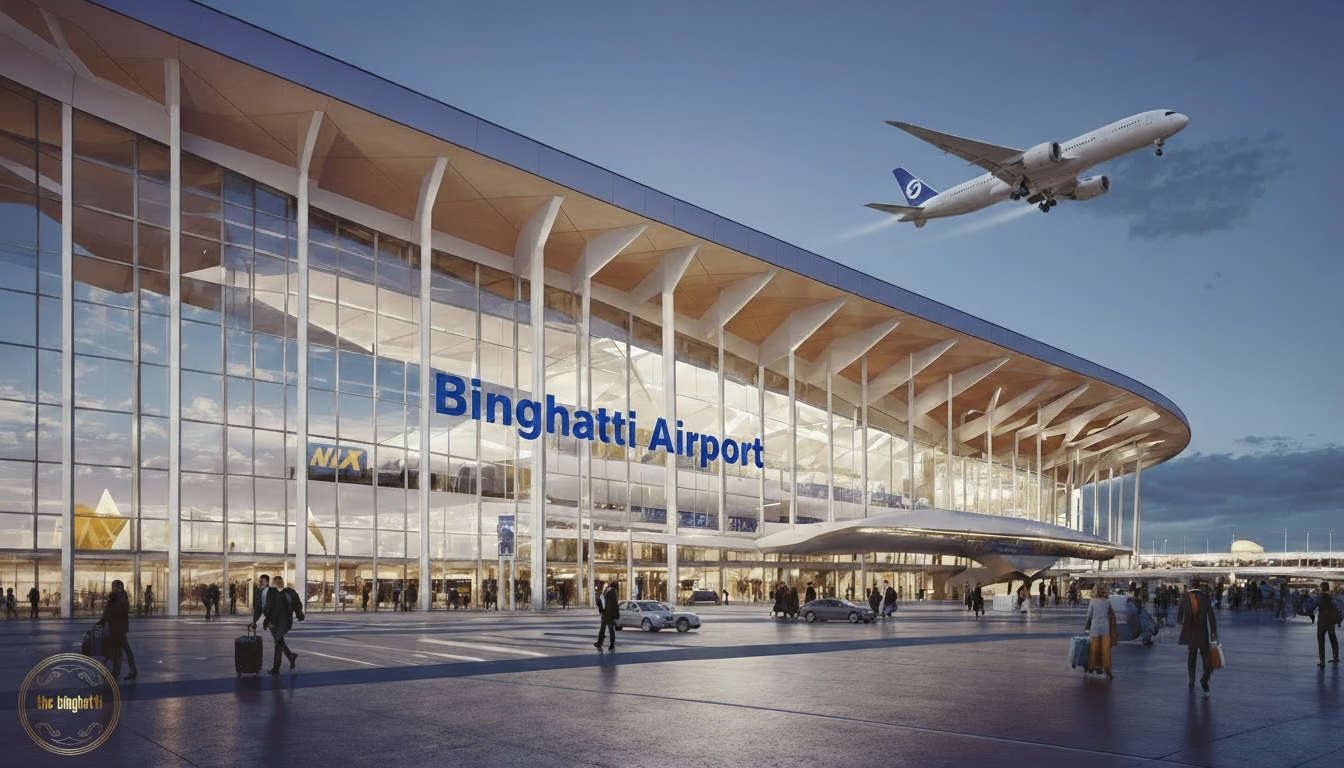
In a landmark development for Romania’s aviation sector, the new international “Binghatti Aerocity” airport in the southern metropolitan area of Bucharest is moving forward with plans for up to 92,000 sqm of commercial property space and two hotels in Phase 1 alone.
This ambitious project, which has strong Romanian Government backing, is aimed at alleviating capacity constraints at the existing Henri Coandă International Airport (Otopeni) and promises to transform Romania and Eastern Europe’s connectivity and economic growth.
The commercial property development element, which would be built by established property development companies, would include:
- Up to 22,000 sqm of retail and food and beverage provision
- A 3 and 4-star hotel, approx. 16,000 sqm GBA combined (240–300 rooms total)
- 40,000 sqm of offices, health-tech, and training facilities
- 18,000 sqm of E-commerce / Belly Cargo Module
- 30,000 sqm of office/administrative space
Developed through a joint venture between Jetstream and the Property Sud Invest, the airport will be constructed in three phases to ensure efficient rollout. Phase 1 will establish an initial capacity of 12-15 million passengers and 100,000 tonnes of cargo annually, with the final phase expanding to over 40 million passengers and more than 500,000 tonnes of cargo per year.
Dorin Catana, Project Director for the developer, says: “The new Bucharest airport represents a once-in-a-generation opportunity to elevate Romania’s connectivity, innovation, and economic potential. With world-class retail and hospitality, a vibrant smart-tech quarter, and modern logistics capacity—including a dedicated e-commerce and belly-cargo module—this development is designed to serve the needs of passengers, businesses, and global partners for decades to come. It is not just an airport; it is a catalyst for sustainable growth and a new gateway for Romania.”
To date, over 2,000 hectares of land have been secured for the airport, plus an additional 35 hectares for an associated port facility, with no major objections from key landowners.
The project enjoys widespread support from the relevant local authorities, including the host municipality, Giurgiu County Council, Bucharest General Municipality, and Sector 4 Municipality. Unlike the overburdened Otopeni Airport – which has seen no significant expansions since 2008 and is operating beyond its design limits – the Binghatti Aerocity is positioned as a vital solution to Romania’s aviation bottlenecks, fostering regional growth without direct competition.
Investment in the project has already surpassed €150 million, with a total projected commitment of €2.5 billion required to bring the full vision to life. Site work is expected to commence once initial funding milestones are met. Major airlines operating in Romania have shown keen interest, including Wizz Air (over 50 percent share), Ryanair, and Turkish Airlines. Additionally, international carriers such as Indigo, Scoot, and other Asian airlines have expressed enthusiasm for launching new routes from the facility.
Catana adds: “The masterplan for The Binghatti Aerocity has been fully completed by two globally renowned firms: Surbana Jurong from Singapore and Scott Brownrigg from the United Kingdom. This collaboration underscores the project’s high standards and international credibility. The initiative has received full endorsement from the Romanian Government and is officially integrated into the country’s Strategic Development Plan and supported across political lines. Multiple announcements from the Mayor of Sector 4 – the Bucharest district nearest to the site – have already highlighted the project’s momentum.”
To ensure seamless accessibility, critical transport infrastructure is being prioritised. The recently completed southern Bucharest Ring Road will be connected directly to the new airport. A monorail project, spearheaded by the Mayor of Sector 4, will link the site to central Bucharest. Furthermore, the nearby main railway line is undergoing modernisation, complemented by a refurbished adjacent station.
The project’s international stature is bolstered by key partners Wall Street Capital Partners and Surbana Jurong. Prominent figures from Wall Street Capital Partners, including Douglas C. Anderson and Stephan Moore, have been instrumental in advocating for the development through media engagements, emphasising its financial robustness and global appeal.
“This is more than an airport; it’s a gateway to Romania’s future prosperity,” said Douglas C. Anderson of Wall Street Capital Partners. “With the expertise of UK-based Scott Brownrigg in our masterplan, we’re ensuring world-class design that will position Bucharest as a premier European hub.”
For UK stakeholders, the involvement of Scott Brownrigg highlights an opportunity for British engineering excellence to contribute to Eastern Europe’s infrastructure renaissance.
The Binghatti Aerocity is a state-of-the-art airport development in southern Bucharest, designed to address critical capacity issues in the nation’s aviation sector. Jointly developed by Jetstream and Property Sud Invest, with master planning by Surbana Jurong and Scott Brownrigg, the project is fully aligned with Romania’s national strategic goals and supported by key international investors, including Wall Street Capital Partners.