In 2025, the total value of investment transactions in Poland’s commercial real estate market reached €3.98 billion. The fourth quarter reaffirmed the market’s resilience and sustained investor activity, even against a demanding macroeconomic and geopolitical backdrop. According to BNP Paribas Real Estate Poland’s report “Review. Investment Market in Poland – Q4 2025,” the market operated steadily, with liquidity bolstered by domestic capital and numerous mid-sized transactions.
Selective but Unwavering Capital
Throughout 2025, investor activity focused on selected asset classes and projects meeting clearly defined investment criteria, helping maintain stable transaction volumes and leading to selective deal-making. The “wait and see” strategy was especially visible in the core assets segment. However, rising returns and stable valuations paved the way for several major deals to go through. Activity zeroed in on projects with growth potential and assets located in proven locations. In addition to typical market transactions, a 45 percent stake buyout in the CPI Poland portfolio, valued at approximately €0.5 billion, took place.
“The record influx of EU funds has turbocharged investment activity and fast-tracked infrastructure projects, deepening the market and expanding portfolios with fresh ventures. The combination of robust economic fundamentals, rising rental incomes, and stable financing conditions has brightened the outlook for total returns and motivated investors to rethink their strategies,” comments Mateusz Skubiszewski, Senior Director, Head of Capital Markets at BNP Paribas Real Estate Poland.
Logistics and Offices Lead the Way
The industrial and logistics sector claimed the largest share of investment volume in 2025, accounting for €1.47 billion, or 37 percent of all transactions. Offices followed, with €1.31 billion and a 32 percent share. The retail sector wrapped up the year with €811 million, representing about 20 percent of the market.
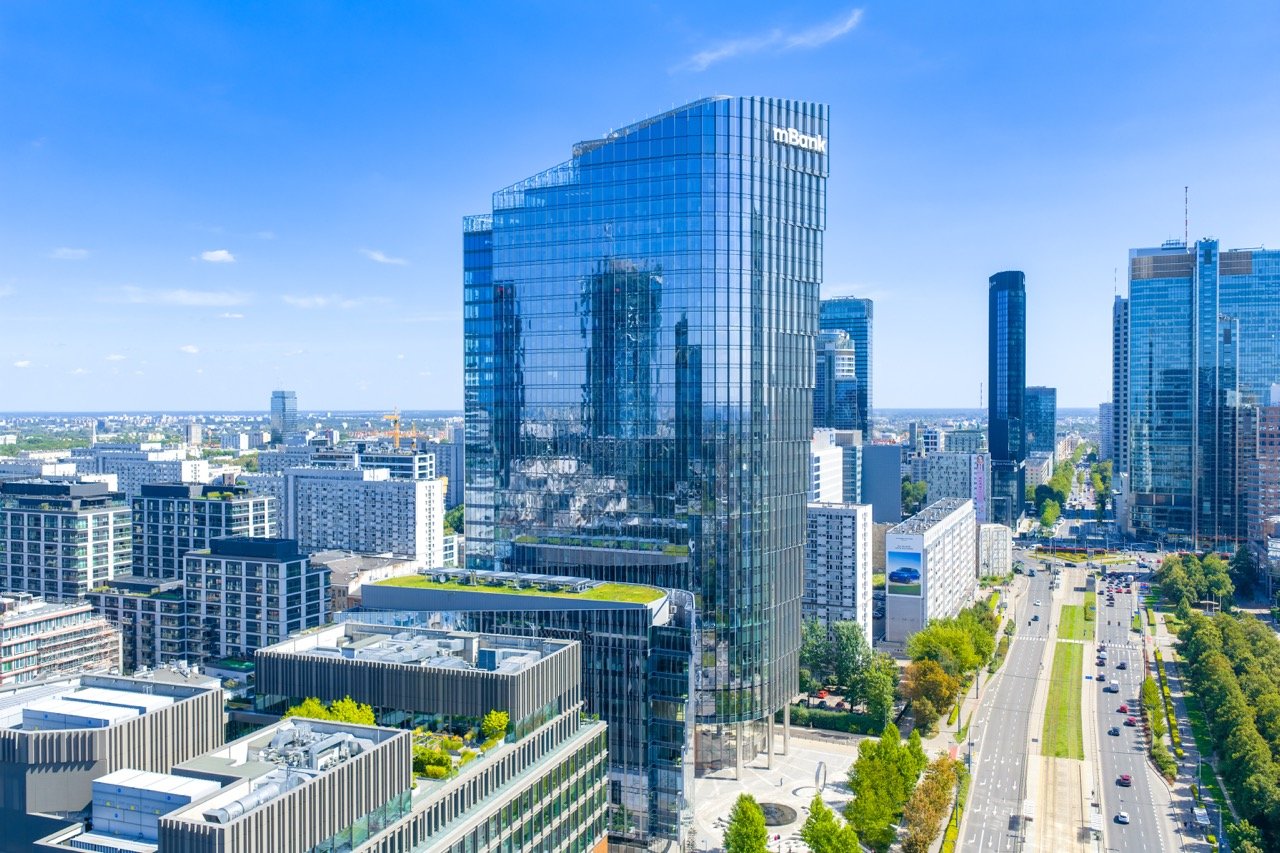
Among the biggest transactions finalised in 2025 was the sale and leaseback of the Eko Okna portfolio, worth €254 million in the industrial-logistics sector. In the office market, pivotal deals included the sale of Wola Centre in Warsaw for €127 million and the earlier completion of the Mennica Legacy Tower sale. In retail, notable transactions included the disposal of the Trei Portfolio retail parks for €186 million and the sale of Libero Gallery in Katowice for €103 million.
Dominance of Medium and Smaller Deals
The market structure in 2025 underscored the growing importance of deals valued between €40 and €100 million, whose total volume reached €1.59 billion. This segment saw a 50 percent year-on-year increase and remained vital for market liquidity. Transactions above €100 million accounted for €949 million, marking a decrease compared to the previous year and confirming investors’ selective approach to the largest assets.
Capitalization Rates Hold Steady
In 2025, prime yields in Poland remained stable. By year-end, they stood at roughly 6.25 percent for prime offices and industrial-logistics assets, 6.50 percent for shopping centres, and 5.25 percent for logistics projects supporting e-commerce.
“Despite interest rate cuts in Europe in 2025, we haven’t seen pronounced compression in prime yields. This is mainly due to the persistently high cost of financing and investors taking a selective approach to new acquisitions. Poland remains attractive compared to Western Europe thanks to still higher yields and solid demand fundamentals, which continue to drive interest in prime assets,” comments Karolina Wojciechowska, Director, Capital Markets Department, BNP Paribas Real Estate Poland.
Outlook for 2026
The stabilisation of monetary policy in the eurozone and favourable macroeconomic forecasts for Poland, with GDP growth expected to climb from 3.5-3.6 percent in 2025 to 3.7 percent in 2026, are set to lift investor sentiment. BNP Paribas Real Estate Poland experts point out that rising interest from new international players and greater predictability in valuations may translate into a gradual uptick in transactions, especially for top-quality assets.
“In 2025, the arrival of new foreign players, including French institutional funds, broadened the base of international capital. In 2026, growing optimism – fueled by monetary policy stabilisation, further rental growth, and robust support from EU funds – should spark interest among a wider pool of investors. With rising yields and a stable economic environment in the EU, Poland is well placed to draw in more foreign capital and strengthen its position as an attractive investment market, ”summarises Mateusz Skubiszewski.